
Introduction
Picture yourself walking through fifteenth-century London on a crisp October morning. You're a merchant from Bristol, and you need to buy silver candlesticks for a wealthy client back home. The problem? You've never been to London before. You don't know anyone here. And you've heard plenty of stories about travelers getting swindled by craftsmen who stamp "sterling" on anything that glitters.
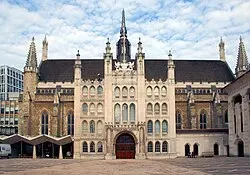
But then you turn onto Foster Lane and see it: Goldsmiths' Hall. The building practically announces itself. Carved above the entrance, a leopard's head stares down at you - the very same symbol you've seen stamped on every legitimate piece of silver you've ever owned. Inside, you know, wardens test every ounce of precious metal before it can be sold. The building itself is the guarantee.
Now fast-forward six-hundred-some-odd years. A homeowner in Littleton is searching "furnace repair near me" on her phone. She's never hired an HVAC company before. She doesn't know anyone in the trade. And she's heard a fair share of stories - plenty of them about contractors who quote one price and charge another.
She's facing exactly the same problem you faced on Foster Lane. And the solution, surprisingly, looks almost identical.

The word "hallmark" wasn't always a metaphor. It was literally a mark made at a hall -specifically, the mark stamped onto silver at Goldsmiths' Hall after it passed inspection. In 1300, King Edward I decreed that every piece of silver sold in England must first be brought to the hall, tested for purity, and stamped with a leopard's head to prove it genuine.
That homeowner in Littleton is looking for the same thing: proof. And the guild masters who built those soaring halls in market squares all across medieval Europe? They solved problems that modern web designers are still wrestling with. How do you signal trustworthiness to someone who's never met you? How do you guide a visitor through spaces of increasing intimacy? How do you prove you're qualified before anyone hires you?
Their solutions, encoded in stone and ceremony, offer a surprisingly practical blueprint for building websites that actually convert.
Floor Plans That Built Trust
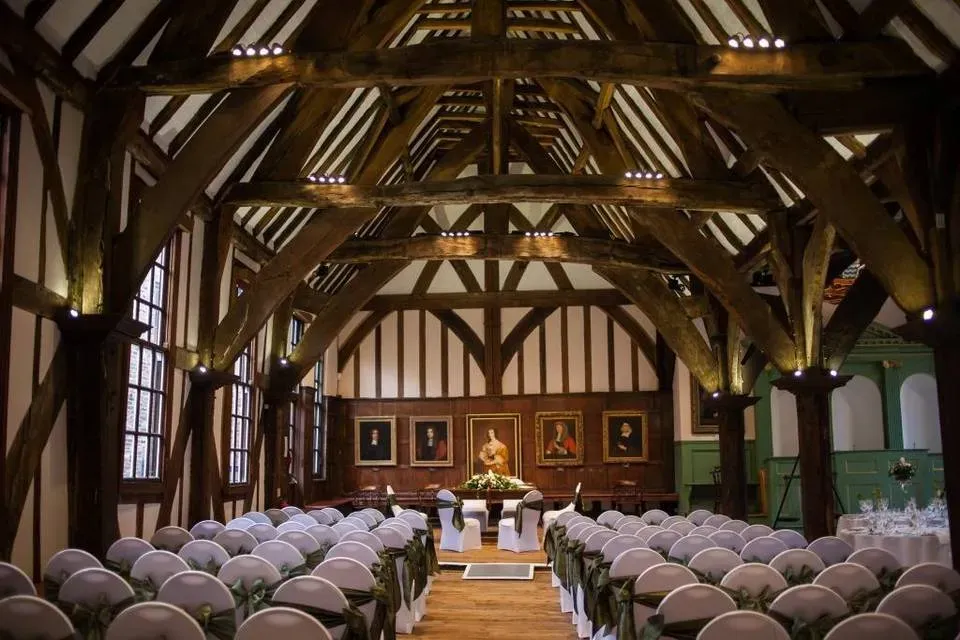
Walk into York's Merchant Adventurers' Hall today - it's the largest timber-framed building in England still used for its original purpose - and you'll notice something interesting. The building doesn't reveal itself all at once.
Built between 1357 and 1361, the hall was designed with three distinct levels of access, each requiring greater trust to enter.
The ground floor served as a hospital for the poor, visible to anyone passing by. This wasn't just charity (though it was that too). It was strategic communication. A guild that cared for the vulnerable projected reliability. Think of it as the medieval equivalent of those "Proud Supporter of Local Little League" badges you see on contractor websites.
One floor up, the Great Hall hosted trade discussions where deals were struck. Semi-public, but guild members had the advantage - they knew the space, knew the customs, and knew each other.
Hidden beyond that was the Governor's Parlour. A private chamber with a sixteenth-century fireplace and stained-glass windows, where only the inner circle convened. Getting there meant you'd already proven yourself.
London's Guildhall employed the same logic at grander scale. Rebuilt between 1411 and 1440, its Great Hall measured 153 feet long and 55 feet high, making it the second largest single-span medieval hall in Britain. But size was only part of the strategy. The Common Council met in an upper chamber. The Aldermen gathered in an inner room where the city's records and funds were stored.
The key insight: access wasn't just restricted; it was visibly restricted. The architecture itself communicated that some spaces had to be earned.
Sound familiar?
Your website faces the identical challenge. A visitor landing on your homepage is standing in your public market square. They might become a customer. They might be a competitor snooping around. They might be completely lost. Your site architecture has to guide the genuine prospects toward increasingly private spaces - service pages, quote request forms, client portals - while making the journey feel natural rather than like an interrogation.
Homepage = the ground floor. Welcoming, impressive, clearly communicating who you are.
Service pages = the Great Hall. Where serious discussions happen.
Contact forms and scheduling = the private chambers. For people ready to do business.
Client portal = the Governor's Parlour. Only for those who've already trusted you.
The guild masters understood something we sometimes forget: tiered access isn't about keeping people out. It's about earning intimacy progressively.
Why Faking a Quality Mark Could Get You Killed
The leopard's head that King Edward I mandated in 1300 was just the beginning.
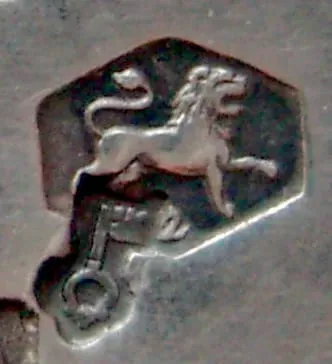
By 1544, English silver carried four distinct marks: the leopard's head (identifying London as the testing location), a maker's mark (the individual craftsman's signature), a date letter (the year of testing), and the lion passant, where a walking lion certified sterling purity at 92.5% silver.
Each mark served a different trust function. Together, they created complete traceability and accountability. If a piece of silver was later discovered to be substandard, investigators could identify the offending maker by their registered mark, track them down, and prosecute them.
The penalties started harsh and got worse. A first offense might mean a fine and public humiliation. A second could result in expulsion from the guild. In an era when only guild members could legally sell their work, this meant economic death.
By 1757, the stakes had escalated to actual death. Counterfeiting a hallmark became a felony punishable by hanging. The crown understood that the entire economic system depended on buyers being able to trust small symbols stamped into metal.
Modern trust badges work on exactly the same psychology, though thankfully with lighter penalties for abuse.
When your website displays a BBB A+ rating, a NATE certification badge, or your state contractor's license number, you're doing exactly what medieval goldsmiths did: borrowing credibility from an independent authority.
The key word is independent. Research consistently shows that 66% of consumers have more confidence in third-party verified trust signals than in self-made claims. This is why "BBB Accredited" outperforms "We're trustworthy!" and why displaying your license number matters even though customers rarely actually verify it. The existence of an external authority willing to stake its reputation on your quality is trust building.
But here's the thing: the modern equivalent of the hallmark isn't just certification badges. It's also customer reviews.
According to 2025 data from Capital One Shopping Research, over 99% of American consumers now read online reviews before purchasing. The same study found that conversion rates increase by 270% when displaying five or more reviews - with the first five having the highest impact.
The parallel to medieval enforcement is instructive too. Just as guilds expelled members who produced substandard work, modern platforms punish businesses with bad reviews through algorithmic burial. The penalty isn't hanging, but it might as well be: only 20% of consumers will even consider businesses rated three stars or lower.
Your Portfolio Is Your Masterpiece
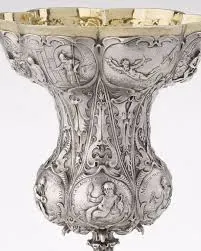
In 1531, a young goldsmith in Nuremberg who wanted to become a master faced a specific test. He had to produce three items: a columbine cup (an elaborate silver goblet shaped like the flower), a gold ring set with a precious stone, and a die for a steel seal.
These weren't arbitrary assignments. Each demonstrated mastery of different skills: raising and shaping silver, setting gems, and cutting fine detail into hard steel.
The pieces had to be produced without assistance, evaluated by existing masters, and if approved, retained by the guild as permanent proof of qualification. Several of these columbine cups survive today in the Victoria & Albert Museum and British Museum, still serving as evidence of competence centuries after the craftsmen who made them died.
Here's what the guild masters understood that modern trades businesses sometimes forget: claims of competence mean nothing without evidence.
The masterpiece wasn't primarily about beauty or artistic innovation. Contemporaries noted that aspiring masters typically produced work that was "well and suitably made" and demonstrated "accepted formulas and norms." The point was proof of capability, not creative genius.
When a homeowner in Denver searches "AC replacement near me," they're not looking for artistic innovation either. They're looking for evidence that you've done this work before, done it well, and can do it for them.
The most effective portfolio structure mirrors the masterpiece system:
Before-and-after photos shot from the same angle provide visual proof that can't be faked. Project details such as equipment brands, timeframes, and scope of work all demonstrate thoroughness. Client testimonials embedded within each case study provide third-party validation, the medieval equivalent of existing masters signing off on a journeyman's work.
Northwestern University's Spiegel Research Center found that testimonials alongside expensive items increase conversions by up to 380%. For a trades business selling $15,000 HVAC systems or $8,000 bathroom remodels, this isn't a minor consideration.
Your portfolio is your masterpiece examination, repeated with every site visitor.
How "Journeymen" Invented Content Marketing
The concept of the "journeyman" initially had nothing to do with travel. It derives from the French _ journée_ which means “a day”. A journeyman was a craftsman who'd completed his apprenticeship and earned the right to charge by the day, receiving wages rather than just room and board.
But the German tradition took the journey concept literally. After completing apprenticeships, young craftsmen undertook the Wanderjahre: a wandering period lasting at least three years and one day. They traveled to different towns, worked in various workshops, and learned techniques from multiple masters. The tradition was so rigorous that wanderers couldn't return within 50 kilometers of their hometown until the period ended.

The Wanderjahre served a major economic function as well. Through traveling, knowledge was shared across regions and complex networks of craftsmen were established. It also provided trust in the market as well. A journeyman who had traveled widely could claim broader experience. The wandering itself was the credential.
Modern content marketing works on the same principle.
When your plumbing company publishes a blog post explaining "Why Is My Furnace Leaking Water?" you're not selling anything directly. You're demonstrating expertise - wandering through your field in public so potential customers can observe your knowledge before they ever pick up the phone.
The data backs this up. Companies that maintain regular blog content generate 67% more leads monthly than those that don't. But the mechanism isn't just SEO. It's trust-building through demonstrated competence.
Educational content transforms the customer relationship entirely. Instead of a prospect calling with zero frame of reference and wondering if you're going to try to upsell them on unnecessary repairs, they arrive having already read your honest explanation of when repairs make sense versus when replacement is the smarter move. They've watched you give away knowledge for free.
That's the modern equivalent of a journeyman working in full public view, demonstrating skills before asking for payment.
The most effective content for trades businesses solves real problems your customers actually have. Seasonal maintenance guides ("How to Prepare Your AC for a Colorado Summer") establish expertise while capturing search traffic. Troubleshooting content ("What Causes Low Water Pressure?") reaches prospects at the exact moment they're feeling the pain. Cost guides ("Average Cost of Water Heater Replacement in Denver") earn trust by offering the transparency your competitors avoid.
Each piece of content is a small demonstration of competence. It’s a mini-masterpiece proving you know your craft.
Location, Location, Location (Medieval Edition)
The guild masters obsessed over where they built.
They positioned their halls in market squares, at crossroads of major streets, near town halls where laws were made and enforced. The Brussels Grand Place packed its guild houses so close to the Town Hall that merchants could literally watch regulations being written. Ypres built its Cloth Hall (125 meters wide and accessible by boat via the Ieperlee waterway) specifically so cloth traders from across Europe couldn't possibly miss it.
Location wasn't just convenient. It was communicative. A guild hall's proximity to the cathedral suggested divine sanction. Its position near the town hall implied political influence. York's Merchant Adventurers' Hall stood directly beside Micklegate Bar, the ceremonial entrance to the city from London, ensuring it was the first major building prestigious visitors encountered.
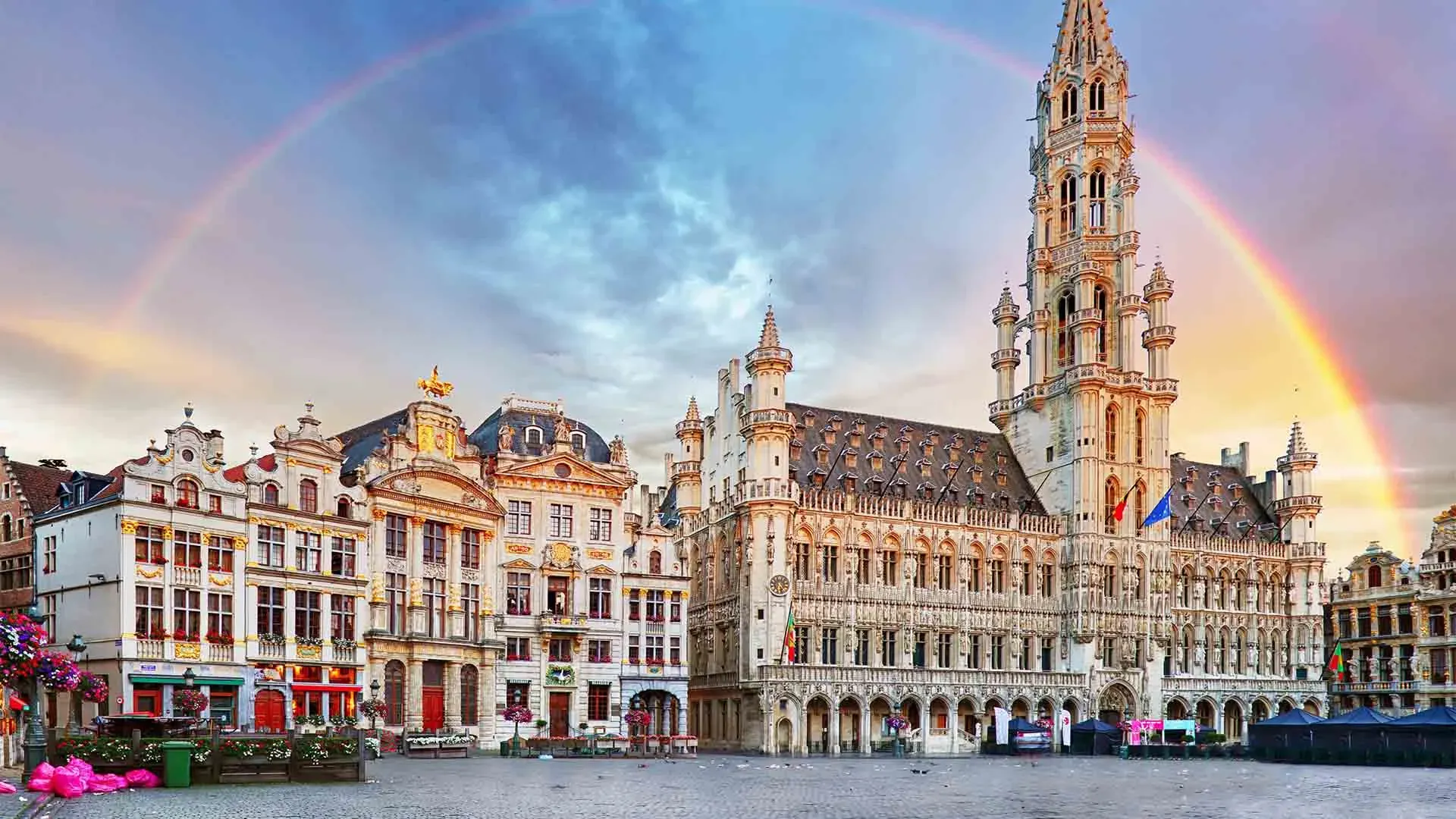
Modern local SEO is the digital version of this.
When someone searches "emergency plumber Denver," appearing in the local map pack, those three businesses Google displays with a map, is the equivalent of owning the corner shop on the market square. You're visible at the exact moment of maximum intent.
The statistics here are stark: more than 50% of contractor leads come from Google Business Profile, according to industry research. Being positioned correctly in digital space matters as much as physical location did in medieval commerce.
Like guild halls, optimizing for local search requires strategic presence. Build dedicated pages for each city and neighborhood you serve. This is the digital equivalent of establishing yourself in multiple market squares. Maintain NAP consistency (Name, Address, Phone identical everywhere online), which is the equivalent of displaying consistent guild symbols. Collect and respond to reviews - the equivalent of cultivating public reputation in a community where word traveled fast.
The guilds also understood that showing up in public was its own form of marketing.
The Lord Mayor's Show has continued for over 800 years. It started as a legal requirement where newly elected mayors had to travel to Westminster and swear loyalty to the sovereign. But guilds quickly transformed it into spectacle. Livery companies paraded with banners, decorated barges, and ceremonial regalia. The procession was the only way to "show" the new mayor to the public before photography or broadcast media existed.
Mystery plays worked the same way. Each guild performed plays matched to their trade. The Shipwrights performed the Building of Noah's Ark, the Bakers performed the Last Supper, the Vintners performed the Marriage of Cana (turning water into wine). As one medieval scholar put it, "You can almost see these plays as a sort of commercial promoting the work of the guild."
Your presence at the local home show, your trucks wrapped in your branding driving through neighborhoods, your sponsorship of the local youth soccer team: these are your processions. They transform your business from an abstraction into something visible, present, and real.
The Blueprint Still Works
London's Worshipful Company of Goldsmiths still tests and hallmarks precious metals today, operating continuously since 1300. They mark approximately three million items annually and maintain records of over 10,000 active maker's marks. The Trial of the Pyx, the annual ceremony testing Royal Mint coins, has occurred every year for more than 700 years.
The German Wanderjahre continues as well. In trades like carpentry, roofing, and metalworking, young craftsmen still don the traditional black bellbottom pants and brimmed hats, travel for three years without returning home, and learn from multiple masters. The Meisterbrief (master's certificate) remains legally equivalent to a bachelor's degree.
These aren't quaint relics. They're evidence that the core problems guilds solved: establishing trust, proving competence, and building professional reputation. These remain just as relevant today as they were when Foster Lane was unpaved.
For a trades business, the medieval guild framework offers a remarkably complete blueprint:
Your hallmarks = Google reviews, BBB rating, license numbers, certification badges. Independent verification that you meet community standards.
Your masterpiece = Your portfolio. Documented evidence of work completed to standard, retained as proof of capability.
Your guild hall architecture = Your website structure. Public homepage → semi-private service pages → private contact forms → client portal. Progressive levels of trust, earned step by step.
Your journeyman's wandering = Your educational content. Public demonstration of expertise that builds credibility before you ever meet a prospect.
Your market square position = Local SEO. Digital positioning that determines who sees you when they're ready to buy.
Your procession = Marketing presence. Trucks, uniforms, sponsorships, community involvement. Making yourself visible and real.
The guild masters who built Goldsmiths' Hall understood something essential: trust isn't claimed. It's demonstrated. It's constructed through visible systems, proven through independent verification, and sustained through consistent behavior over time.
They encoded these principles in architecture, ceremony, and law.
Your website, properly built, can do the same thing.
Works Cited
- Assay Office London. "History of Hallmarking."
- BrightLocal. "Local Consumer Review Survey 2024."
- Britannica. "Guild."
- Britannica. "Hanseatic League."
- Capital One Shopping Research. "Online Review Statistics 2025." Capital One Shopping, 2025.
- Chester Mystery Plays. "History of the Chester Mystery Plays."
- City of London. "Livery Companies."
- Edelman Trust Barometer. "2024 Edelman Trust Barometer Global Report." Edelman, 2024.
- Giles, Katherine. "An Archaeology of Social Identity: Guildhalls in York, c. 1350-1630." University of Reading, 2000.
- History of York. "The Mystery Plays."
- JSTOR Daily. "Punishing Forgery with Death." 2017.
- Lord Mayor's Show. "History of the Lord Mayor's Show."
- Medieval London (Fordham University). "Guildhall."
- Merchant Adventurers' Hall York. "History."
- Northwestern University Spiegel Research Center. "How Online Reviews Influence Sales." Spiegel Research Center, 2017.
- Ogilvie, Sheilagh. "The Economics of Guilds." Journal of Economic Perspectives, vol. 28, no. 4, 2014, pp. 169-192.
- Smith, Adam. The Wealth of Nations. 1776.
- The German Times. "The Wander Years." 2019.
- The Goldsmiths' Company. "Hallmarking Stories: The History of Hallmarking."
- Trustpilot Business. "The Psychology Behind Trust Signals." Trustpilot, 2024.
- UNESCO World Heritage Centre. "Grand-Place, Brussels."
- Victoria and Albert Museum. "Columbine Cup Collection Records."
- World History Encyclopedia. "Medieval Guilds." World History Encyclopedia, 2024.
Weekly Insights
Get actionable web development tips that actually work. No fluff, just proven strategies.
Join 5,000+ developers and business owners worldwide
Weekly insights • No spam • Unsubscribe anytime

Jackson White
Content Creator
Jackson is the founder and lead developer at Launch Turtle, bringing over 4 years of technical expertise to help small and mid-sized businesses establish powerful online presences. Let's Launch!