

Why South Korea Requires Its Own Digital Playbook
South Korea's e-commerce market exceeded $100 billion in 2024, making it the fifth-largest online retail economy in the world. The country has a whopping 97 percent internet penetration rate, 95 percent smartphone ownership rate, and online commerce now accounts for roughly 40 percent of total retail sales (one of the highest rates on the planet). Mobile devices generate approximately 75 percent of all e-commerce transactions. Same-day delivery is standard. Next-day delivery is considered slow.
And yet, for all its technological maturity, South Korea is one of the easiest Asian markets for Western businesses to underestimate.
Unlike China, there's no Great Firewall and no ICP licensing. And unlike Japan, the cultural differences in web design aren't immediately visible to Western eyes, as Korean sites often look and feel familiar at first glance. Google works, AWS works, and international credit cards are accepted at most major retailers.
So what makes South Korea different? It's their internet ecosystem. South Korea runs on platforms that most Western marketers have never heard of, with search behavior that doesn't follow Google's rules, messaging habits that bypass email entirely, and payment infrastructure that treats global providers as an afterthought. The businesses that succeed here are the ones that understand these systems; not the ones that assume a translated website and a Google Ads campaign will be enough.

The Search Landscape: Naver First, Google Second
This is the single most important thing a Western business needs to understand about South Korea: Google is not the default search engine.
Naver is South Korea's homegrown search platform launched in 1999. It held approximately 63 percent of the domestic search market in 2025, according to data from the research firm InternetTrend. Google followed at roughly 30 percent. Microsoft's Bing held about 3 percent, and Daum (operated by Kakao Corporation) captured just under 3 percent.
The gap actually potentially widened in 2025, with Naver reclaiming territory it had been losing to Google in prior years. Analysts attribute this rebound partly to Naver's investment in AI-powered search features, including "AI Briefing," which summarizes information from credible sources at the top of search results.
However, the picture is complicated by conflicting data sources. StatCounter, which measures page views rather than user behavior, briefly showed Google overtaking Naver in September 2025. Both measurement methodologies have limitations.
Despite the statistical discrepancies, the practical takeaway for businesses is clear: you need a strategy for both platforms, and Naver should come first.
Why Naver Isn't Just "Korean Google"
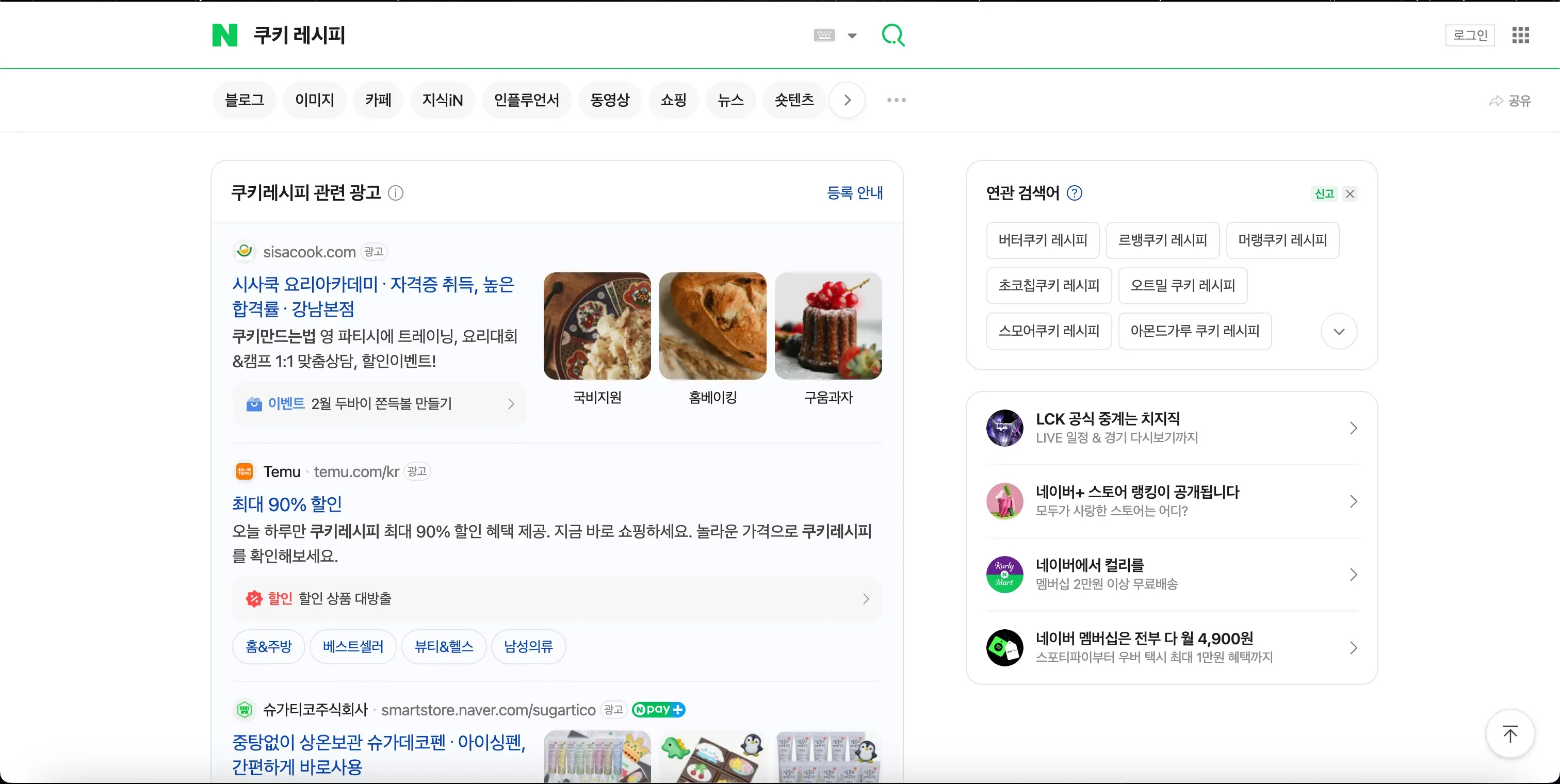
Naver's search results look and function nothing like Google's. Where Google delivers a list of ranked links, Naver organizes results into categorized sections, with a portal-style layout that surfaces its own properties prominently. A typical Naver search results page includes sections for Naver Blog posts, Naver Cafe (community forum) discussions, Knowledge iN (a Yahoo Answers-style Q&A platform), Naver Shopping results, news articles, and then organic links to external websites.
This means that traditional SEO (optimizing your own website to rank in organic search results) is significantly less effective on Naver than on Google. External websites are functionally buried beneath Naver's own ecosystem. To gain meaningful visibility, businesses need to create content directly on Naver-owned platforms: maintain a Naver Blog, participate in relevant Naver Cafe communities, and register with Naver's webmaster tools (Naver Search Advisor) to ensure your site is crawled.
Naver also handles crawling and ranking differently than Google. Where Google's bots aggressively crawl the open web, Naver relies more on manual sitemap submissions through Search Advisor. Furthermore, a .kr domain provides a measurable ranking advantage within Naver's domestic results. And while Google excels at semantic understanding, Naver still places heavier weight on exact keyword matching and keyword frequency.
For businesses serious about the Korean market, the investment isn't just in SEO. It's in building a presence within Naver's ecosystem from the ground up.
KakaoTalk: South Korea's Digital Infrastructure
If LINE is the connective tissue of Japanese digital life, KakaoTalk is the central nervous system of South Korea's.
KakaoTalk has approximately 48.9 million monthly active users in South Korea, covering 94.7 percent of the total population and 97.2 percent of all internet users. Among messenger users in their twenties, adoption reaches a staggering 97.5 percent. The numbers are similarly overwhelming across virtually every other age group. One billion messages are sent through the platform every day.
KakaoTalk isn't just a messaging app. It's a super-app ecosystem operated by Kakao Corporation that encompasses payments (KakaoPay, with 24 million monthly active users), banking (KakaoBank), ride-hailing (KakaoT), navigation (KakaoNavi), gaming, content, and commerce. KakaoPay processed over 43 trillion won (approximately $30 billion) in total payment volume in 2024, and that number is projected to continue to climb over the course of the decade. Users can pay bills, transfer money, shop, split restaurant checks, and book taxis without ever leaving the Kakao ecosystem.
For businesses, KakaoTalk Channel (formerly KakaoTalk Plus Friend) is the primary entry point into this network. Businesses create official channels that users can follow to receive messages, promotions, coupons, customer service, and transaction notifications directly within KakaoTalk. In a market where email marketing has limited reach, KakaoTalk Channel is effectively the equivalent of an email list with dramatically higher open rates.
The broader lesson here is the same one we identified in Japan: a digital strategy that excludes the dominant messaging platform is functionally invisible to a huge portion of the consumer base. In South Korea, that platform is KakaoTalk, and the exclusion is even more extreme given its near-total market penetration.
The Broader Social and Content Ecosystem
Beyond KakaoTalk, the Korean social media landscape has some familiar faces and some that Western marketers may not expect.
Instagram reaches approximately 27.4 million monthly active users in South Korea, making it the second most-used social platform after KakaoTalk. It's particularly strong in fashion, beauty, food, and lifestyle; which are exactly the verticals where Korean consumer culture is most influential globally.
Band, a group communication app also operated by Naver Corporation, maintains 17 million users. It's popular for community groups, hobbyist clubs, school parent associations, and workplace teams; less a content platform and more of a coordination tool. Naver Cafe functions similarly, with 9.3 million users organizing around shared interests in forum-style communities.
TikTok has grown to roughly 8.3 million users, with its lightweight variant TikTok Lite leading all platforms in average time spent per user (nearly 19 hours per month). X (formerly Twitter) reaches about 7.5 million users. YouTube is enormously popular across all demographics, functioning as both an entertainment platform and, increasingly among younger users, a search engine; a pattern we're seeing globally but that's particularly pronounced in South Korea.
LinkedIn remains niche, but relevant for B2B contexts. Facebook usage has declined significantly among younger Korean demographics and is now primarily used by older users and for certain community groups.
The critical platform for content-driven commerce in South Korea is actually Naver itself. Naver Blog, Naver Shopping, and Naver's new AI-driven Discovery tab, which merges short-form video with one-click checkout, are where product discovery happens for Korean consumers. Live commerce is massive: roughly 60 percent of Korean consumers have purchased through live shopping formats, and livestream conversion rates exceed those of static product listings. Naver, Coupang, and KakaoTalk all operate live commerce features.
Korean Web Design: Dense, Direct, and Mobile-First
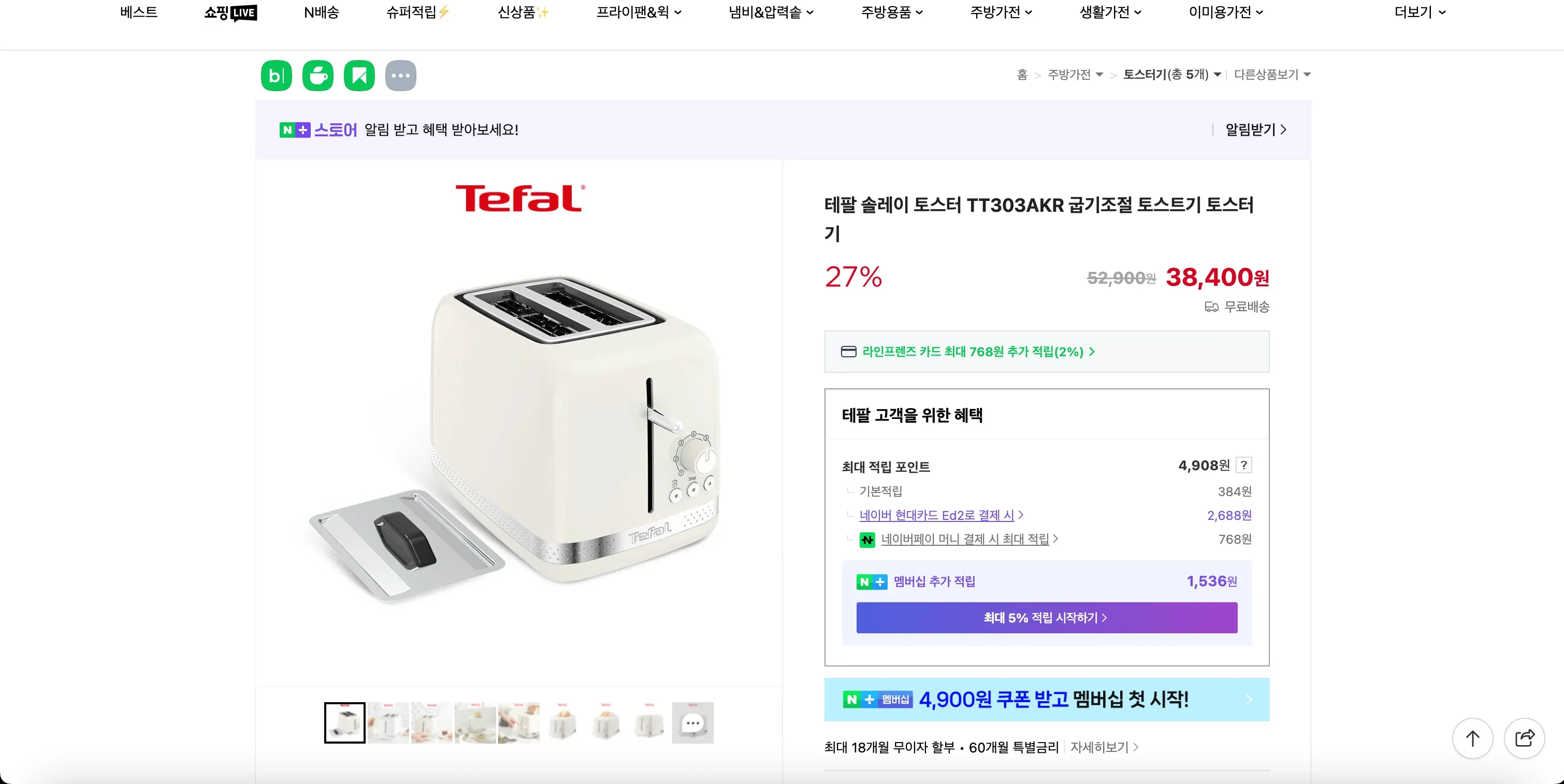
Korean web design shares some of the information-density characteristics we discussed in our Japan guide, but the aesthetic is different. Where Japanese web design tends toward text-heavy maximalism rooted in decades of portal-style convention, Korean web design combines that density with a more contemporary visual polish. Korean sites often look modern (clean typography, strong photography, polished UI) but pack significantly more information per screen than their Western counterparts.
Korean users expect to see comprehensive information upfront: product specifications, pricing, reviews, shipping details, promotional badges, and comparison data all visible without clicking through multiple pages. The design philosophy prioritizes efficiency and comprehensiveness over progressive disclosure - very similar to an Amazon listing page.
Several characteristics define Korean web design conventions. Text is used more extensively than icons. Where Western design leans on iconography and visual metaphors, Korean interfaces prioritize explicit text labels; buttons that say exactly what they do, menus that describe their destinations in full. This reduces ambiguity and aligns with Korean users' expectation for directness. Speed is paramount. Korean users benefit from some of the fastest internet infrastructure in the world, and their tolerance for loading delays is correspondingly low. Interactive elements, animations, and rich media are common, but they're expected to be instantaneous. Mobile-first is the default, not the aspiration. With 75 percent of e-commerce transactions happening on phones, sites that aren't fully optimized for mobile are functionally broken.
Korean sites also make extensive use of community-generated content integrated into the shopping experience. User reviews, photo reviews, blog posts, and Q&A sections are treated as core commerce infrastructure, not supplementary content. Trust in Korea is built through visible social proof and peer validation.
E-Commerce Platforms: The Coupang Factor
South Korea's e-commerce market is dominated by a handful of domestic platforms that foreign businesses must understand.
Coupang is the single largest player, with approximately 29 percent domestic e-commerce market share and $30.4 billion in gross merchandise sales in 2024. Often described as "the Amazon of Korea," Coupang's competitive advantage is logistics: its Rocket Delivery service provides next-day or same-day delivery on millions of items, fulfilled through a proprietary logistics network. Coupang reported $7.9 billion in revenue in Q1 2025 alone. For any business selling physical products in South Korea, a Coupang presence is essentially mandatory.
Naver Shopping holds approximately 17 percent market share and functions differently from a traditional marketplace. It aggregates products from independent online stores, functioning partly as a search-and-discovery layer for Korean e-commerce. Sellers maintain their own storefronts (often hosted on platforms like Cafe24 or Shopify) and connect them to Naver Shopping's product search. However, Naver has been rapidly building out its logistics capabilities, introducing same-day and next-day fulfillment options to compete with Coupang.
Gmarket and 11st remain significant players, particularly for cross-border commerce. Gmarket's Global Shop allows international sellers to list products for Korean consumers. SSG.com (operated by Shinsegae Group, which also owns Emart) caters to the premium segment. And Kurly, which pioneered the "dawn delivery" model (ordering at night and receiving groceries by 7 AM) reported its first-ever quarterly profit in May 2025, validating the Korean consumer's appetite for speed.
Payments: Cards, Mobile Wallets, and Local Expectations
Credit and debit cards are the dominant payment method for online purchases in South Korea, but the landscape is more complex than that headline suggests.
Korea has its own card networks alongside the international players. While Visa and Mastercard are widely accepted, many Korean consumers carry domestic cards from issuers like Shinhan, Samsung, Hyundai, and KB Kookmin. These cards often include loyalty programs, installment payment options (paying in monthly installments at zero interest is standard practice for Korean consumers), and integrated transit card functionality.
Digital wallets have surged as well. KakaoPay leads with 24 million monthly active users and over $30 billion in annual transaction volume. Naver Pay and Toss are the other major players. Samsung Pay has strong adoption given Samsung's domestic market dominance. These wallets are deeply integrated into their respective ecosystems (i.e. KakaoPay into KakaoTalk, Naver Pay into Naver Shopping) creating seamless checkout experiences that Korean consumers now expect as baseline.
For foreign businesses, the key challenge is that most Korean mobile payment services require a Korean bank account and Korean phone number to set up. This creates friction for cross-border commerce. Businesses selling to Korean consumers should, at minimum, support major international credit cards (Visa, Mastercard, and ideally local Korean card brands), and integrate with Korean payment gateways that support KakaoPay and Naver Pay for domestic transactions when possible.
Domains, Hosting, and Infrastructure
South Korea's .kr country code top-level domain is not openly available for registration. Companies must have at least one branch located in South Korea, and individuals must be registered residents. Foreign businesses without a local presence can use registrar services that provide local agent representation, but the requirement adds friction that doesn't exist in many other markets.
The practical implication: many international businesses targeting Korea operate on .com domains with Korean-language content, which is functional but suboptimal. A .kr domain provides a ranking advantage on Naver and signals local relevance to Korean consumers. Businesses with serious Korean market ambitions should investigate local entity registration or partner with a registrar that offers local presence services.
Hosting infrastructure is straightforward. South Korea has world-class internet speeds and major cloud providers (AWS, Google Cloud, Azure) operate Seoul data centers. For optimal performance, hosting content on servers located in South Korea or nearby Asian regions is recommended, as Korean users expect fast load times and will notice latency that users in other markets might tolerate.
Legal Compliance: PIPA and Data Privacy
South Korea's Personal Information Protection Act (PIPA) is one of the world's most comprehensive data privacy frameworks, and the 2023–2025 amendments have made it substantially more stringent.
Key requirements for businesses targeting Korean consumers include explicit and specific consent for data collection and processing (broader than GDPR in its consent requirements), transparency obligations around how personal data is collected, used, and shared, a data portability right effective from March 2025 allowing individuals to request transfer of their data to another provider, and a requirement (effective October 2025) that foreign businesses operating in Korea appoint a domestic representative for privacy matters.
PIPA applies to any entity processing the personal information of South Korean individuals, regardless of where that entity is located. This means that a foreign website collecting data from Korean users (through analytics, account registration, or e-commerce transactions) falls under PIPA's jurisdiction. Administrative penalties have been increasing significantly: PIPA imposed over 23 billion won (~$16 million USD) in penalties in 2023 alone, and the trend is only climbing upward.
For practical compliance, businesses should implement clear, granular consent mechanisms on their Korean-facing websites (not bundled consent checkboxes), publish a comprehensive privacy policy in Korean, and prepare for data portability requests. The EU and South Korea reached a mutual adequacy decision, which simplifies data transfers between the two jurisdictions; but US-based businesses don't benefit from this and must navigate cross-border transfer requirements independently.
Building for Korea: A Practical Checklist
For businesses ready to approach the Korean market, here's a condensed operational framework.
Search and Discovery: Build a Naver Blog and maintain it with regular, keyword-rich Korean-language content. Register your site with Naver Search Advisor and submit sitemaps. Optimize for both Naver and Google, but prioritize Naver. Consider a .kr domain for maximum local search advantage if the budget allows. Investigate Naver Shopping integration if you sell products.
Messaging and Communication: Establish a KakaoTalk Channel. Use it for customer service, promotions, transaction notifications, and community building. Do not rely on email as your primary communication channel with Korean consumers.
Design and UX: Provide comprehensive product and service information upfront. Prioritize mobile experience above everything else. Use explicit text labels over icons. Integrate user reviews and community content prominently. Ensure fast load times: Korean users have among the lowest tolerance for latency in the world.
Payments: Support major Korean card brands alongside Visa and Mastercard. Integrate KakaoPay and Naver Pay through a Korean payment gateway. Offer installment payment options, as Korean consumers expect this as standard.
E-Commerce: Establish presence on Coupang and/or Naver Shopping. Consider Gmarket's Global Shop for cross-border entry. Invest in competitive delivery logistics; Korean consumers judge reliability partly by delivery speed.
Legal Compliance: Ensure PIPA compliance, including granular consent mechanisms and a Korean-language privacy policy. Appoint a domestic privacy representative if operating commercially in Korea. Monitor evolving AI-related regulatory requirements under the forthcoming AI Framework Act.
Localization: Have native Korean speakers create and review all content. Korean is a language where machine translation still produces noticeable errors, particularly in formal or commercial contexts. Honorific language conventions (존댓말, jondaenmal) matter in business communications and customer-facing content.
A Market That Rewards Speed and Specificity
South Korea is a market where half-measures are visible immediately. Korean consumers are sophisticated, digitally native, and operate within a platform ecosystem that rewards businesses that commit to playing by local rules. A translated website without a Naver Blog is invisible. A checkout flow without KakaoPay is incomplete. A product page without comprehensive specifications and user reviews is suspicious.
The infrastructure barriers are low: no firewalls, no licensing requirements, excellent connectivity, and a consumer base that actively shops online more than almost any other country on earth. The meaningful barriers are strategic though: understanding that Naver isn't Google, KakaoTalk isn't WhatsApp, and Korean consumers' expectations for information density, speed, and platform integration are calibrated to the most competitive e-commerce market in Asia.
The businesses that succeed in South Korea are the ones that meet those expectations on the platforms where Korean consumers actually spend their time.
If you're exploring the Korean market and want to build your digital presence on the right foundation, we'd welcome the conversation.
Works Cited
- Statista. "eCommerce — South Korea Market Forecast." 2025.
- PCMI. "South Korea E-Commerce Market Data 2024–2027." May 2025.
- TMO Group. "South Korea eCommerce Sales Estimates (March 2025)." April 2025.
- Mordor Intelligence. "South Korea E-Commerce Market Size, Share & Forecast Report 2030." July 2025.
- K-Biz Insights. "South Korea Ecommerce Market Report: 2024–2025." 2025.
- Anchanto. "Korea E-Commerce Guide 2026: Trends, Market Insights & Opportunities." January 2026.
- The Korea Times. "Naver Tops 60% in Korea's Search Market: Data." January 2026.
- Asia Economy (AsiaE). "Naver Achieves 63% Search Market Share, Dominates as Top Search Engine Over Google." January 2026.
- KM Journal. "Naver Loses Its Grip on Korea's Search Market as Google Takes the Lead." January 2026.
- InterAd. "Korean Search Engine Market Share 2025." May 2025.
- The Digital X. "NAVER vs Google: Top 4 Search Engines in South Korea and How to Maximize Local SEO." June 2025.
- The Global Statistics. "South Korea KakaoTalk User Statistics 2025." June 2025.
- The Korea Herald. "KakaoTalk Tops Social Media Use in Korea; TikTok Lite Leads in Time Spent." October 2025.
- Antom / Knowledge Hub. "Understanding Kakao Pay, the South Korean Payment and Lifestyle App." May 2025.
- The Korea Herald. "Kakao Pay Expands Multilingual Support for Foreign Users." December 2025.
- DSGPay. "The Complete Guide to Payment Methods in Korea for Foreigners and Businesses." April 2025.
- TJC Group. "Data Privacy Law: A Guide to South Korea's PIPA Regulation." December 2025.
- Global Referral Network. "Personal Information Protection Act (PIPA) Updates – 2025." August 2025.
- Chambers and Partners. "Data Protection & Privacy 2025 — South Korea." 2025.
- Abion. "Register a .kr Domain in South Korea." August 2025.
- Zouhall. "Marketing Digital SEO: A Global Perspective." October 2025.
- Vocal Media / 01. "Why Korean Web Design Feels So Different." 2025.
- Teqnoid. "How Korean UI/UX Design Stands Out from Global Trends." May 2025.
Weekly Insights
Get actionable web development tips that actually work. No fluff, just proven strategies.
Join 5,000+ developers and business owners worldwide
Weekly insights • No spam • Unsubscribe anytime

Jackson White
Content Creator
Jackson is the founder and lead developer at Launch Turtle, bringing over 4 years of technical expertise to help small and mid-sized businesses establish powerful online presences. Let's Launch!