

Why Japan Demands a Different Approach to Web Development
Japan's e-commerce market reached $286.5 billion in 2025, with projections pushing toward $701.8 billion by 2034. The country has 109 million internet users (roughly 88% of its 123 million population) and 97 million of them use LINE, the messaging super-app that functions as the connective tissue of Japanese digital life. By virtually every measure, Japan is one of the largest and most mature digital economies on the planet.
It's also one of the most misunderstood.
Unlike China, where the Great Firewall creates a literal infrastructure barrier and ICP licensing requirements gate access to the domestic internet, Japan runs on the same global infrastructure as the rest of the world. Google works. AWS works. Your existing tech stack probably works. There are no government-mandated hosting requirements, no separate search engine ecosystem, and no content filtering apparatus standing between your website and Japanese consumers.
So what makes Japan different? Everything else.
Japan's digital landscape reflects decades of intentional design philosophy, consumer expectations, and cultural values that diverge meaningfully from Western conventions. The businesses that succeed here are the ones that recognize those differences not as obstacles to overcome, but as a market to build for. This guide covers what that looks like: from design and infrastructure to legal compliance, SEO, payments, and the cultural nuances that separate a localized website from a translated one.
I'm writing this from Japan, where I live on a spousal visa while running two US-based businesses remotely. My perspective here is informed by firsthand experience navigating the Japanese digital ecosystem as both a consumer and a business operator; and by the ongoing process of learning just how much intentionality is embedded in the systems that Japanese users interact with every day.

Japan by the Numbers
Before we get into the how, the scale of the opportunity is worth establishing.
Smartphones generate approximately 65% of all e-commerce transactions in Japan. Credit and debit cards account for about 67% of online spend. Japanese online consumers are willing to spend up to $455 on a single purchase ($77 more than the global average) reflecting a consumer base that prioritizes quality and thoroughness in their purchasing decisions. And here's the number that frames the entire strategic picture: 95% of Japan's e-commerce sales are domestic. Japanese consumers overwhelmingly prefer buying from websites that feel Japanese - in design, in language, in user experience, and in the trust signals they display.
That 95% figure is the reason this guide exists. A translated American website with a .com domain can technically reach Japanese consumers. But reaching them and converting them are fundamentally different challenges.
Understanding the Japanese Digital Ecosystem
Building for Japan requires understanding how Japanese users navigate the internet, which platforms they trust, and where their digital habits differ from what Western marketers might assume.
Search: Google Leads, but Yahoo Japan Still Matters
Google holds approximately 82% of Japan's search market share as of mid-2025. Yahoo Japan follows with roughly 9%, and Bing captures about 7%. At first glance, this looks like standard Google-dominated territory. The nuance lies in Yahoo Japan's role as an ecosystem rather than just a search engine.
Yahoo Japan adopted Google's search algorithm in 2010, which means your core SEO strategy covers both platforms. But Yahoo Japan is also a portal integrating news, shopping (Yahoo Shopping competes directly with Rakuten and Amazon Japan), finance, weather, auctions, and over 100 additional services into a single platform. With approximately 83 million monthly users and over 70 billion page views per month, Yahoo Japan's audience footprint is substantial even though its search market share has declined.
However, the demographic dimension here is important. Among Japanese teenagers, Google usage outpaces Yahoo nearly three-to-one. But among users aged 50 to 59, Google and Yahoo are used almost equally (41% versus 40% respectively). Like anywhere else, your target demographic should inform how much attention you pay to Yahoo's ecosystem.
LINE: The Platform You Cannot Ignore
If there is one takeaway from this guide, it's this: LINE is not optional for businesses targeting Japanese consumers.
LINE has 97 million monthly active users in Japan - approximately 79% of the total population. It originated as an emergency communication tool during the 2011 Tōhoku earthquake, when conventional telecommunications infrastructure was destroyed, and has since evolved into a comprehensive super-app encompassing messaging, payments (LINE Pay, now integrated with PayPay), news, shopping, manga, gaming, and official government communications.

For businesses, LINE Official Accounts are the primary entry point. Over 3 million companies in Japan maintain them, using the platform to message customers directly, distribute coupons, conduct surveys, and provide customer service. In a country where email marketing requires explicit opt-in consent under anti-spam legislation, LINE provides an alternative communication channel with remarkable reach. A striking statistic: 41% of surveyed Japanese smartphone users report that LINE is the only social media platform they use. A digital strategy that excludes LINE is functionally invisible to a significant portion of the Japanese consumer base.
The Broader Social Landscape
Beyond LINE, Japan's social media ecosystem includes several platforms with significant reach. YouTube serves approximately 78 million monthly users (90% of internet users), functioning as both an entertainment platform and (increasingly among younger demographics) as a search engine. X (formerly Twitter) maintains roughly 67 million monthly active users, making Japan one of X's strongest markets globally. Instagram reaches about 55 million users with particular strength in fashion, food, and beauty verticals. TikTok has grown to approximately 26 million users, skewing younger. LinkedIn remains niche at around 4 million users, relevant primarily for B2B and international professional contexts.
A note on YouTube's role: among Japanese teenagers, YouTube usage as a search tool (26%) is double that of Yahoo (13%), and this trend intensifies with younger age groups. For businesses targeting consumers under 30, video content strategy may warrant equal or greater investment than traditional keyword strategy.
Japanese Web Design: A Different Set of Principles
Japanese web design operates according to a coherent set of principles that reflect the country's cultural values, consumer psychology, and communication traditions. Understanding these principles, rather than reflexively applying Western design conventions, is essential to building websites that resonate with Japanese users.
Information as a Trust Signal
One of the most significant differences between Japanese and Western web design philosophy concerns the role of information density. Where Western design has spent the past two decades emphasizing minimalism, whitespace, and progressive disclosure, Japanese design culture places high value on comprehensive information presentation.
There's a principle in Japanese called 目瞭然 (ichimokuryōzen) which can be roughly translated as "understanding at a glance." The underlying logic is that when all relevant information is visible simultaneously, users can make informed decisions without navigating through multiple pages. In the Japanese consumer context, presenting minimal information doesn't necessarily communicate sophistication, rather it can communicate incompleteness, or that important details are being withheld.
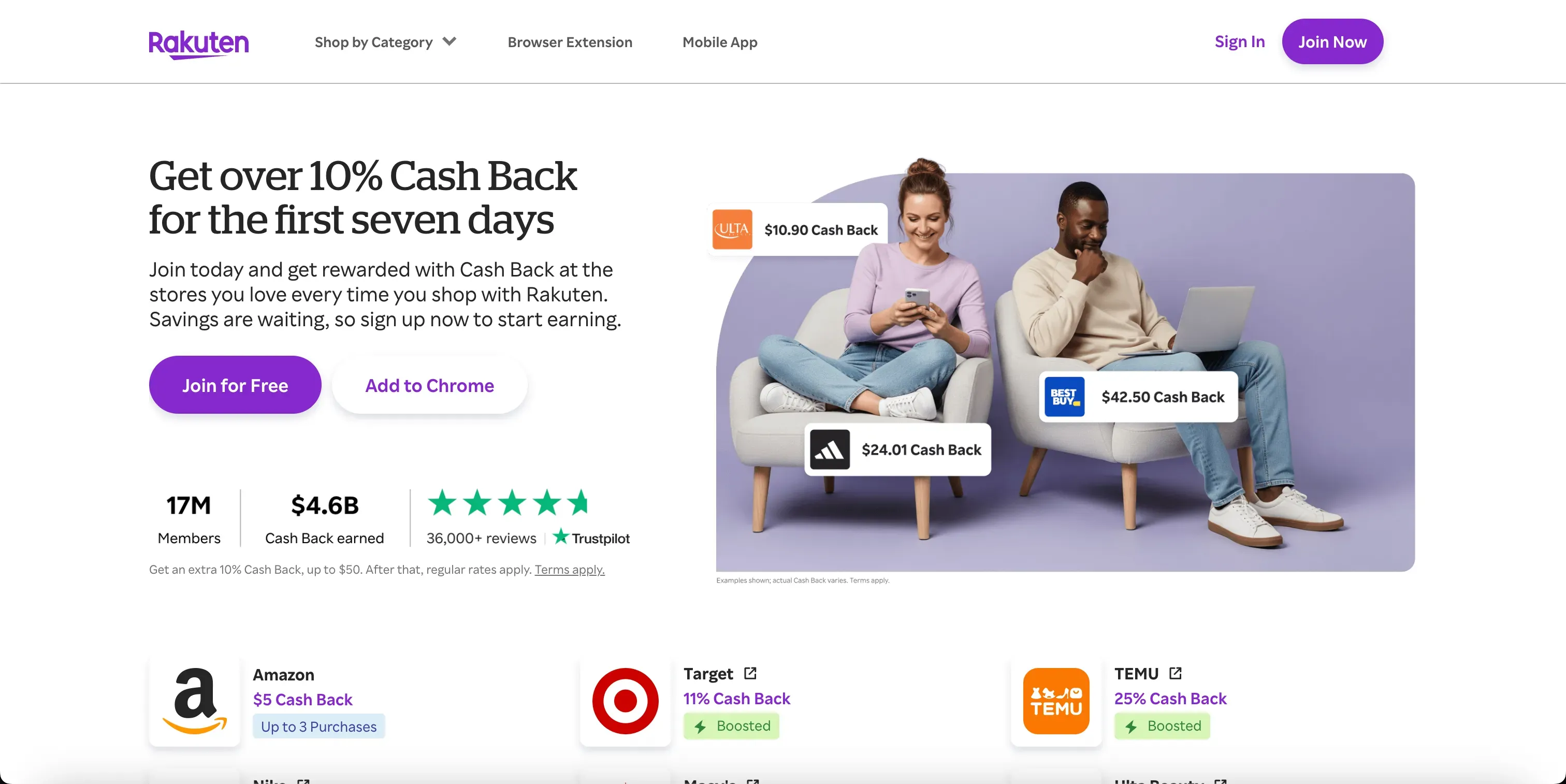
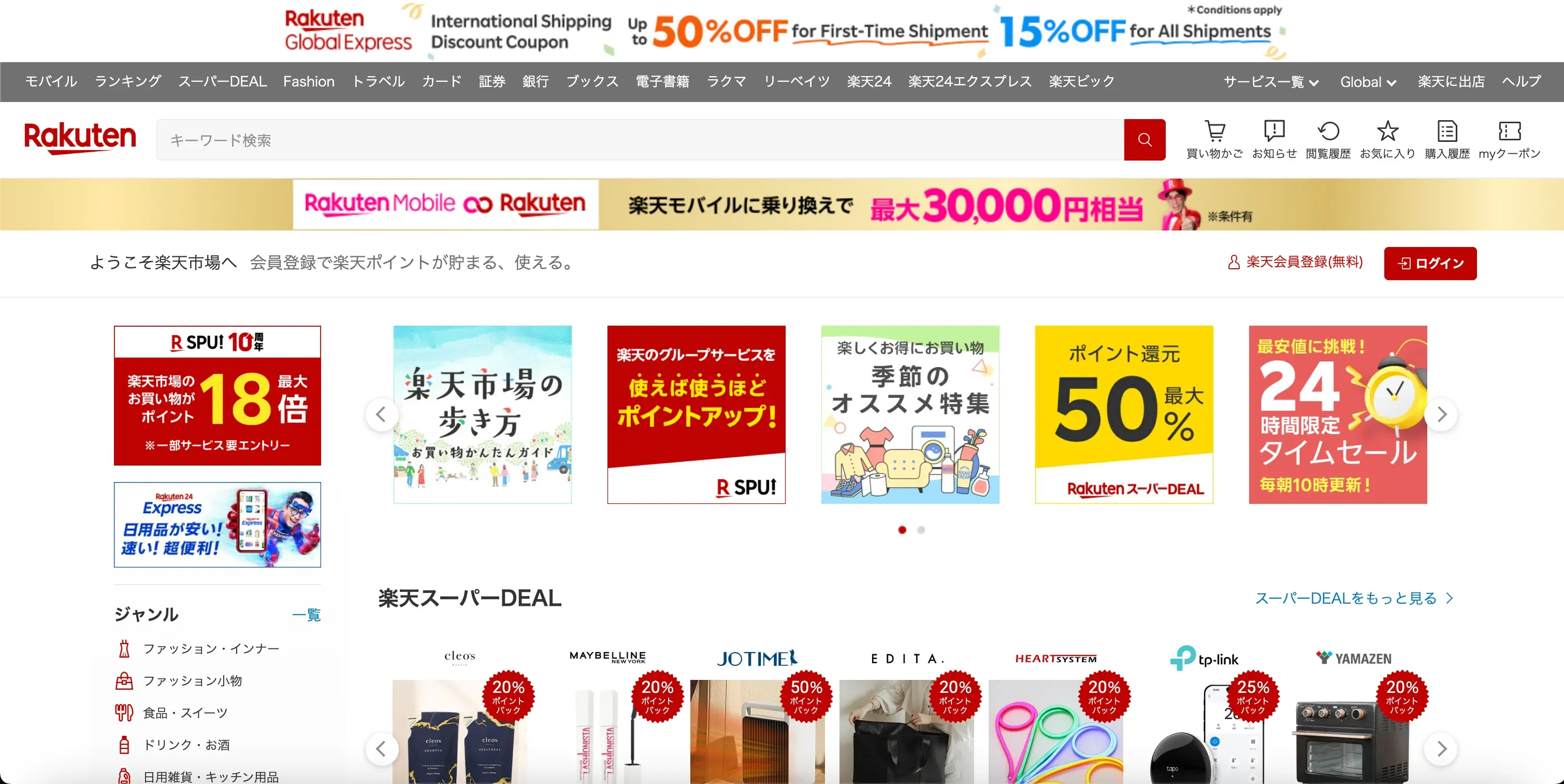
Consider the contrast between Rakuten's Japanese site and its international English version. Same company, fundamentally different approaches. The international site features the kind of clean layouts, bold hero images, and sparse text that Western users expect. The Japanese site presents product photos, detailed specifications, promotional information, customer reviews, and seller details in dense, compartmentalized layouts. Both designs serve their respective audiences effectively: they just solve the trust equation differently.
Bento-Style Layouts and Modular Organization
Modern Japanese web design has increasingly adopted what designers call "bento-style layouts", which are modular content blocks organized in grid systems inspired by the compartmentalized structure of a bento box. These layouts accommodate high information density while maintaining visual organization and scannability. Collapsible sections, micro-interactions like hover effects, and clearly delineated content modules allow Japanese audiences to access the depth of information they expect in formats that work effectively across desktop and mobile.
Typography Across Three Writing Systems
Japanese typography presents design challenges that have no direct parallel in Latin-alphabet design. Japanese text uses three writing systems simultaneously: hiragana (native Japanese syllabary), katakana (used for foreign loanwords and emphasis), and kanji (Chinese characters conveying meaning), along with romaji (Latin alphabet characters). A single sentence might incorporate all four. This complexity has direct implications for web design.
Japanese font creation requires thousands of individual character glyphs to cover common kanji usage, which means the selection of web-safe Japanese typefaces is substantially narrower than what English-language designers are accustomed to. Hiragino, Yu Gothic, and Meiryo cover most professional use cases. Because Japanese text doesn't employ capitalization or italics for emphasis the way English does, designers have historically used image-based text banners with visual treatments like bold outlines, glows, and drop shadows to create hierarchy. Modern CSS3 capabilities are reducing this reliance, but the practice persists across much of the Japanese web.
A practical consideration for localization: Japanese text typically occupies 50-70% of the horizontal space that equivalent English content requires. This means layouts calibrated for English copy will need significant structural adjustment during Japanese localization.
Character Branding and Mascots
Japanese businesses across virtually every sector, from banking and insurance to government services and public safety, employ illustrated characters and mascots as part of their brand identity. This practice reflects a broader cultural aesthetic (kawaii culture) that serves a specific communicative function: mascots humanize institutions, reduce the social anxiety associated with complex or intimidating processes, and create approachable brand identities that resonate across demographic groups.
This is not superficial decoration. It's a considered branding strategy rooted in Japanese communication culture. For businesses entering the Japanese market, understanding the role of character-based branding, even if you don't adopt it for your own brand, helps contextualize the competitive landscape and consumer expectations you'll encounter.
Generational Shifts in Design Expectations
It's worth noting that Japanese web design is not monolithic. There is an active and evolving tension between established information-dense conventions and the influence of global platforms. Younger Japanese users (raised on Instagram, TikTok, and international e-commerce) show measurable preferences for cleaner interfaces. Companies like Wantedly (a Japanese professional networking platform) demonstrate a synthesis approach that integrates minimalist principles with Japanese creative sensibility.
However, for most businesses entering the Japanese market, the strategic recommendation remains: provide more information rather than less, and let your target demographic's preferences guide how far you move along the density-to-minimalism spectrum. Launching with insufficient information and trying to add depth later is a more costly error than launching with comprehensive content and refining the presentation over time.
Hosting, Domains, and Technical Infrastructure
Japan's technical infrastructure requirements are straightforward compared to markets like China: no government licensing, no mandatory domestic hosting, no content filtering systems. But the decisions you make here directly affect both performance and credibility.
Domain Strategy: .jp and .co.jp
Japan's domain landscape centers on two extensions: .jp and .co.jp. The .jp domain can be registered by anyone with a physical address in Japan (proxy registration services are available for international registrants). The .co.jp domain is restricted to companies registered as legal entities under Japanese law, limited to one domain per company, and requires supporting documentation.
The .co.jp domain carries significant trust value. Nearly 97% of publicly listed Japanese companies use it, and there is evidence that Google's algorithm gives .co.jp domains preferential treatment in Japanese-language local search results. For businesses operating a KK (kabushiki kaisha - stock company) or GK (godo kaisha - LLC equivalent) in Japan, the .co.jp is strongly recommended. For foreign businesses without a Japanese entity, a .jp domain through a proxy service is the next best option. Operating your Japanese-market website exclusively on a .com domain is technically viable but sacrifices meaningful trust and SEO advantages.
Hosting and Performance
Japan's mobile infrastructure is extensive with strong 4G/5G coverage nationwide, and smartphone penetration exceeding 85% of the population. Users expect fast load times as a baseline, not a differentiator. Hosting in Tokyo data centers (AWS ap-northeast-1, Google Cloud asia-northeast1, or Azure Japan East) is strongly recommended for latency optimization. CloudFlare, Fastly, and AWS CloudFront all maintain Tokyo points of presence for CDN distribution.
Given that Japanese web design tends toward image-rich, information-dense layouts, your asset optimization pipeline becomes especially important. Lazy loading, modern image formats (WebP/AVIF), and aggressive caching are essential for maintaining sub-two-second mobile load times, which is a performance threshold that Japanese mobile users effectively require.
SSL/HTTPS implementation is non-negotiable. Japanese users are security-conscious, and trust is the central conversion driver in this market. Any signal that undermines security credibility will disproportionately impact conversion rates.
Legal and Regulatory Requirements
Japan doesn't gate internet access behind licensing regimes the way China does. But several legal requirements apply to any business selling to Japanese consumers, and compliance with them is both a legal obligation and a visible trust signal.
Tokushoho: Required Commercial Disclosures
Any business selling products or services online to Japanese consumers is legally required to display a 特定商取引法に基づく表記 (tokutei shōtorihiki-hō ni motozuku hyōki); commonly called "tokushoho." Mandated by the Act on Specified Commercial Transactions, this disclosure page must include your business name, physical address, representative's name, phone number, pricing information, payment methods, delivery terms, and return/refund policies.
This isn't just a regulatory checkbox. Japanese consumers actively look for the tokushoho page when evaluating whether to purchase from a business. Its absence signals unfamiliarity with Japanese commercial norms, which directly undermines the trust that drives conversion in this market.
APPI: Data Privacy Obligations
The Act on Protection of Personal Information (APPI) is Japan's comprehensive data privacy law. It applies to any business handling personal data of individuals in Japan, regardless of where the business is physically located. If you collect email addresses, process payments, or deploy tracking technologies on a website accessible to Japanese users, APPI applies to you.
Key requirements include specifying the purpose of data collection, obtaining opt-in consent for sensitive personal information, publishing a Japanese-language privacy policy, and reporting data breaches to the Personal Information Protection Commission (PIPC). The 2025-2026 reform cycle is introducing administrative surcharges for serious violations, moving Japan toward more active enforcement. APPI has meaningful differences from GDPR in areas like cross-border data transfer rules and breach notification timelines, so assuming GDPR compliance covers your APPI obligations is a common and potentially costly mistake.
Additional Compliance Considerations
The Telecommunications Business Act requires disclosure of external data transmission activities, meaning sites using third-party cookies, tracking pixels, or analytics tools that transmit user data to external services must inform users. Japan's cookie consent requirements are currently less prescriptive than the EU's, but the regulatory trajectory is trending stricter.
Japan's consumption tax (JCT) sits at 10% (reduced to 8% for food and beverages). Since October 2023, Japan has operated a qualified invoice system (インボイス制度). For B2B transactions, your ability to issue compliant invoices directly affects whether your business customers can claim tax deductions on purchases from you.
SEO for the Japanese Market
Google dominates search in Japan. Yahoo Japan uses Google's algorithm. But effective Japanese SEO involves considerably more complexity than translating an English keyword strategy.
Multi-Script Keyword Research
Japanese keyword research is substantially more complex than English because the same concept can be searched using multiple writing systems. The word "computer," for instance, might be searched as コンピューター (katakana, full form), コンピュータ (katakana, abbreviated), パソコン (katakana shorthand for "personal computer"), PC (romaji/English), or 電脳 (kanji, literary). Each variation carries different search volume, competitive density, and user intent.
Effective keyword strategy in Japan must account for this multi-script reality. Research tools that analyze only one romanized transliteration of a Japanese term will miss significant search volume distributed across katakana and kanji variants.
URL Structure and Technical SEO
Japanese characters in URLs encode into lengthy percent-encoded strings that create problems when shared on social media and can cause issues with analytics platforms. Leading SEO practitioners in Japan recommend romaji (Latin character) slugs — so /products/kamera-akusesari/ rather than /products/カメラアクセサリー/. Mobile-first indexing, with Google's mobile-first approach and Japan's high mobile usage, makes responsive design a ranking requirement rather than a recommendation.
Content Depth and Authority
The information density principle that governs Japanese web design extends to content marketing. Japanese users expect thorough, authoritative content that demonstrates genuine expertise. Thin content neither ranks well in Japanese search results nor converts Japanese consumers effectively.
Local Platforms Often Outperform Organic Search
For many product categories, Japanese consumers begin their research not on Google but on specialized platforms. Kakaku.com is the default for electronics price comparison. Tabelog dominates restaurant discovery. Hot Pepper covers beauty salons and dining reservations. Rakuten and Amazon Japan serve as starting points for general retail. Establishing a presence on these platforms (and earning reviews on them) often drives more qualified traffic than organic search alone.
Payment Integration
Japan's payment landscape has its own logic, and understanding it is essential for conversion optimization.
Credit Cards and JCB
Credit and debit cards account for roughly 67% of e-commerce spend. Visa and Mastercard are widely used, but JCB, Japan's domestic card network, is essential to support. Omitting JCB excludes a meaningful segment of potential customers.
Konbini (Convenience Store) Payments
One of the most distinctive features of Japan's e-commerce ecosystem is konbini payment; a system where customers make purchases online, receive a payment code, and complete payment in cash at any of Japan's 56,000+ convenience stores (7-Eleven, Lawson, FamilyMart). These stores operate 24/7 and are located in virtually every neighborhood.
Konbini payments represent approximately 10-18% of online payment volume and are particularly popular among younger consumers (over 42% of buyers aged 15-19 have used them) and among consumers who prefer not to enter credit card information online. In a country where cash still represents a substantial portion of consumer transactions, konbini payments serve as an elegant bridge between digital commerce and physical currency. For e-commerce businesses, offering konbini payments is a meaningful conversion lever.

Mobile Payments: PayPay and Beyond
Japan's mobile payment landscape consolidated significantly through the "cashless payment wars" of 2018-2019, a period during which competing QR code payment apps launched aggressively with heavy subsidies and government support. PayPay, a SoftBank subsidiary, emerged as the clear leader with 56.6 million users and approximately 67% of QR code payment volume. LINE Pay discontinued Japanese operations in April 2025, migrating users to PayPay. Rakuten Pay and au Pay round out the top three mobile payment platforms.
For e-commerce integration, payment processors like Stripe Japan, KOMOJU, and GMO Payment Gateway offer unified APIs that can handle the complexity of supporting multiple Japanese payment methods through a single integration.
Localization Beyond Translation
The distinction between translation and localization is nowhere more consequential than in Japan. Effective localization involves cultural adaptation at every level; from language register and visual design to date formats, customer service expectations, and seasonal marketing calendars.
Language Register and Keigo
Japanese has an elaborate system of honorific language called keigo (敬語) that governs formality levels based on social context. Your website copy, customer service communications, email correspondence, and even error messages need to employ appropriate formality. This requires native Japanese speakers, not simply bilingual translators, who intuitively understand the social weight these linguistic choices carry.
Formatting Conventions
Dates follow a Year-Month-Day format with kanji markers: 2026年2月24日. Currency displays as ¥1,500 (yen symbol preceding the number, no decimal places). Addresses are written from largest to smallest geographic unit — prefecture → city → ward/district → block number → building name. Phone numbers are typically formatted with hyphens (03-1234-5678 for Tokyo). Errors in any of these conventions immediately signal that a site was not built with the Japanese market as a primary audience.
Trust Signals Specific to Japan
Japanese consumers look for credibility markers that may have no direct Western equivalent. A Privacy Mark certification (issued by the Japan Information Processing Development Center) signals data protection compliance. A detailed 会社概要 (kaisha gaiyō - company overview) page with corporate history, leadership information, office address, and founding story establishes institutional legitimacy. Staff photographs on company pages serve as trust accelerators in a culture that values transparency and human connection. Comprehensive FAQ sections, clear return policies, and responsive customer service are core conversion requirements.
Seasonal Marketing and Japan's Gift Economy
Japan's retail calendar includes commercial events without direct Western equivalents. Oseibo (year-end gifts, December) and Ochugen (mid-year gifts, July) are significant commercial occasions centered on formal gift-giving between colleagues, clients, and social connections. Valentine's Day in Japan follows different conventions (women give chocolate to men), with White Day (March 14) serving as the reciprocal occasion. Golden Week - a cluster of national holidays spanning late April to early May - drives travel and leisure spending. Your promotional calendar, content strategy, and inventory planning should account for these distinctly Japanese commercial rhythms.
Operating a Business From Japan
I currently live in Japan on a spousal visa, managing two Colorado-based LLCs across a 14-to-17-hour time zone difference. A few practical observations for entrepreneurs considering Japan-based operations.
Business entity options for establishing a Japanese presence include the KK (kabushiki kaisha - stock company, the most recognized and prestigious structure) and the GK (godo kaisha - LLC equivalent, increasingly common for startups and small businesses). Opening a Japanese business bank account as a foreign national typically requires in-person branch visits, Japanese-language documentation, and significant patience, as major banks (MUFG, SMBC, Mizuho) have rigorous verification requirements, though newer digital-friendly options like GMO Aozora Net Bank are streamlining portions of the process.
The time zone reality is significant. JST (UTC+9) puts Japan 14 hours ahead of Mountain Time and 17 ahead of Pacific. Synchronous communication with US-based clients requires early mornings, late nights, or workflows built around asynchronous tools with explicit expectations about response times.
Japan Launch Checklist
A condensed reference for the essential elements of a Japanese market website launch.
Infrastructure: Host in Tokyo (AWS ap-northeast-1 or equivalent). Register a .jp or .co.jp domain. Implement SSL/HTTPS. Configure CDN with Tokyo presence. Optimize for sub-two-second mobile load times.
Legal Compliance: Publish a tokushoho disclosure page. Draft a Japanese-language APPI-compliant privacy policy. Disclose external data transmission practices. Register for JCT invoicing if conducting B2B transactions.
Design & UX: Design for information depth and comprehensive content presentation. Use native Japanese fonts (Hiragino, Yu Gothic, Meiryo). Implement modular, scannable layouts. Ensure fully responsive mobile design.
Payments: Support credit cards including JCB. Integrate konbini payments. Offer PayPay and/or Rakuten Pay. Consider bank transfers (furikomi) for B2B.
SEO: Research keywords across all Japanese writing systems plus romaji. Use romaji URL slugs. Optimize for both Google and Yahoo Japan SERP features. Establish presence on relevant local platforms (Kakaku.com, Tabelog, Rakuten). Prioritize content depth.
Marketing & Communication: Establish a LINE Official Account. Develop presence on X and YouTube. Build a seasonal marketing calendar for Japanese commercial events. Ensure all customer-facing content uses appropriate keigo.
Trust Signals: Publish a detailed 会社概要 (company overview) page. Display team photographs. Provide comprehensive FAQs. Pursue Privacy Mark certification where appropriate. Feature testimonials from Japanese customers.
Quality Assurance: Have native Japanese speakers review all content. Test payment flows across all supported methods. Verify date, currency, and address formatting. Conduct user testing with Japanese consumers before launch.
Building for Japan's Future
Japan is a market that rewards commitment, thoroughness, and cultural attentiveness. The infrastructure barriers are minimal; no firewalls, no licensing requirements, no separate technology ecosystem. The meaningful barriers are the ones that require genuine understanding of how Japanese consumers evaluate trust, process information, and make purchasing decisions.
The businesses that succeed in Japan are the ones that build for Japan. The distinction matters, and the market is more than large enough to justify the investment.
If you're considering a Japanese market entry and want to start that process on the right foundation, we'd welcome the conversation.
Jackson is the founder of Launch Turtle, a Denver-based web development studio specializing in custom websites for businesses navigating international markets. He currently lives in Osaka, Japan.
Works Cited
- IMARC Group. "Japan E-Commerce Market Size & Growth Forecast 2034." 2025.
- DataReportal. "Digital 2025: Japan." February 2025.
- Payments and Commerce Market Intelligence (PCMI). "Japan's E-commerce Market: Key Data and Trends 2024-2027." January 2025.
- PCMI / The Paypers. "Japan: 2025 Analysis of Payments and Ecommerce Trends." June 2025.
- The Egg. "Most Popular Search Engines in Japan 2025." September 2025.
- Zo Digital Japan. "What Is the Most Popular Search Engine in Japan?" February 2025.
- ULPA. "The Japanese Search Engine Market: A Complete Guide [Updated for 2025]." June 2025.
- Digital Marketing for Asia. "5 Reasons Why LINE Is the Most Popular App in Japan." January 2026.
- The Global Statistics. "Japan LINE Users Statistics 2025." June 2025.
- Humble Bunny. "Japan's Top Social Media Platforms for 2025 - 10th Edition." February 2026.
- iXora Solution. "Why Japanese Web Design Breaks All the Rules." September 2025.
- Info Cubic Japan (ICJ). "Japanese Web Design in 2025: Still Quirky, but More Modernized." June 2025.
- Info Cubic Japan (ICJ). "Japanese UX Patterns and Metrics to Optimize Trust, Performance." November 2025.
- The Japan Times. "Why Japan's Internet Looks Weird — Unless You Live Here." December 2025.
- MultiLingual. "The Truth About Japanese Web Design." August 2021.
- Export to Japan. "Acquiring a Japan Web Domain." January 2024.
- JP-Domains.com. "Japan Register: FAQ." Accessed February 2026.
- Edamame Japan. "Comprehensive Guide of .jp Domain." Accessed February 2026.
- Secure Privacy. "Japan APPI Compliance Guide (2026)." 2025.
- ICLG. "Data Protection Laws and Regulations Report 2025-2026: Japan." July 2025.
- Wikipedia. "Japan Act of Specified Commercial Transactions." Accessed February 2026.
- Stripe. "A Guide to Konbini Payments." January 2024.
- KOMOJU. "Konbini Payments Explained: How It Works and How to Implement." July 2024.
- KOMOJU. "Cashless Shift in Japan (Key Trends Uncovered 2025)." January 2025.
- Marc Steinberg. "The Incentives of PayPay Against the Convenience of Cash." SAGE Journals, 2025.
- AWISEE. "Japan Ecommerce Market Statistics & Insights in 2025." December 2025.
- TMO Group. "eCommerce in Japan: Insights and Analysis." March 2025.
- Mordor Intelligence. "Japan E-Commerce Market Size & Share Outlook to 2031." Accessed February 2026.
- Mahana Corporation. "Japanese Domain Registration, Webserver Hosting." Accessed February 2026.
Weekly Insights
Get actionable web development tips that actually work. No fluff, just proven strategies.
Join 5,000+ developers and business owners worldwide
Weekly insights • No spam • Unsubscribe anytime

Jackson White
Content Creator
Jackson is the founder and lead developer at Launch Turtle, bringing over 4 years of technical expertise to help small and mid-sized businesses establish powerful online presences. Let's Launch!